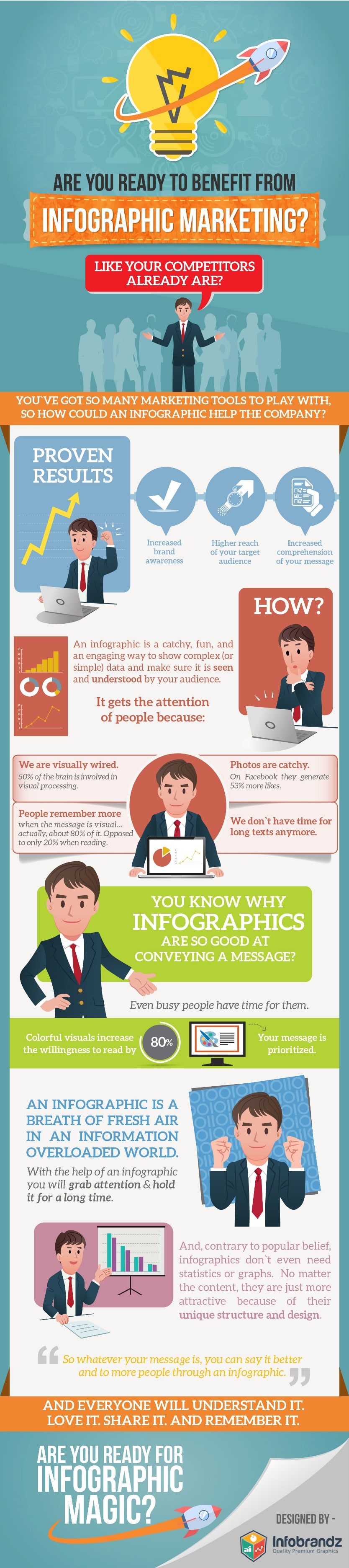
It is an open secret that the use of Infographics makes Blogger Outreaching a level simple, Here are a few more reasons why Infographic Marketing has become the first choice of all the small to medium business owners as far as their content marketing campaign is concerned –
So you invested all that blood, sweat and tears (time, effort and money) in marketing that infographic that you thought was going to take the world by storm.
Only it didn't.
We need to be able to identify a problem before we can fix it.
So what went wrong?
- Did your audience just not get it?
- Was your message lost in translation?
- Did the design fall short?
- The script?
- Or was marketing itself the problem?
Here is a list of some of the most common mistakes people make with Infographic Marketing. Discover which small details are holding you back and how to customize your next infographic and its marketing campaign to unleash their full potential.
Accuracy Matters
First things first. The cardinal mistake that people/ infographic design agencies or marketing agencies can make is to use incorrect data, whether it is outdated or just plain wrong.
Infographics are called INFO-graphics for a reason, people! There are two types of situations that you definitely want to avoid with your infographic’s audience:
1. They see a lot of pretty graphics but cannot find the right information; and
2. They read a claim in the infographic and their immediate reaction is, “ I know that’s not true!”
If either of these things happen, your infographic is not worth the pixels it is displayed on.
Why?
Because you create a negative impression where it could have been positive or even just neutral; the screen space and audience attention you obtained have actually worked against instead of for you.
Besides an immediate rejection of that particular infographic, you are also doing virtually irreparable damage to your brand. Remember, trust is an asset that can be lost in a moment but can take much longer to regain, if at all. Don’t get it wrong.
Another point that often gets overlooked in infographics is that you cannot control when someone will see your infographic. What might be true today won’t necessarily be tomorrow. Always include a creation date stamp.
This will help you avoid inadvertently sabotaging yourself even after including the most accurate information.
Sourcing Matters
While we are on the issue of information accuracy, here’s another stumbling block for otherwise brilliant infographics – “The source list”.
We touched on the importance of trust above. One of the main reasons that reputable sites might have rejected your infographic submission is the lack of a list of sources.
Few respected sites will simply take your word for any data – just like you, they, too, have reputations to protect. They might not necessarily check every single one (or maybe not even a single one) but the presence of a source list in itself is an indication of a serious body of work and competent hands.
Another tip: An individual’s blog is rarely the best source to cite.
Often, you can trace a trail of data references to their origin. The overwhelming proportion of credible statistics are compiled by a limited number of established and reputable sources like:
- The U.N.
- Data.gov
- Statista
- Pew Research
Be professional and don’t give anyone a chance to wonder if your work has a solid foundation. Where applicable, cite them instead.
Outsourcing
There is an acronym popular with database information managers: GIGO.
Garbage In, Garbage Out.
It can just as easily be applied to any field, except perhaps recycling (and maybe viral cat videos).
via GIPHY
There are two distinct elements to every infographic – the text and the graphics.
With a tight budget, it can sometimes be tempting to substitute professional content creators for lower-priced not-so-professionals. There is a whole industry of ‘Fivers’ and what not that has arisen around this approach and a glut of ‘They were brilliant! Would use again!’ testimonials.
Don’t be fooled.
As an infographic creator and marketer, you understand the level of work and commitment that goes into the creation of each one. There is a reason why individuals are only able to command that level of pay despite the hours that have to be invested in creating one. And it has all to do with quality.
The words and the graphics are how your audience will be drawn to your infographic. It is what determines whether:
- an editor decides to publish it;
- whether an influential blogger decides to share it, and
- whether it piques the interest of the average internet user whose attention is fleeting at best.
If you shortchange them here, you have just shot yourself in the foot.
Do it Yourself Tools
As we discuss cost savings, a special word of caution about online DIY infographic tools.
When something seems too good to be true, it usually is.
Free infographics are the perfect example. There is always a catch, and the catch with DIY infographic tools is a marked departure from the quality, versatility and polish of a custom design. Cookie-cutter templates are poor storytellers.
Established companies like Lemonly, killerinfographics , infographicworld , columnfivemedia , Infobrandz eschew the free option altogether and focus solely on customized creations.
If you are looking to use an infographic as a minor element of a presentation, DIY tools might be an attractive, free option. However, if you are looking to market yourself or your business seriously, the generic nature and questionable quality of a free infographic product might do your cause more harm than good. In that case it is recomended that you seek for a professional infographics creator.
What is Trending
One of the best ways to discover what the world is talking about is What’s Trending lists on social media. However, this a very keen double-edged sword.
Too many infographics are created simply to be able to attach a hashtag that is trending without serious consideration of whether it actually offers any real value.
Before you start, ask yourself:
- Is this a topic I understand?
- Am I creating content of value?
- Is my content original or simply cobbled from others?
If you do not contribute anything of significance, your investment of time, creativity and effort you made will be lost in the oceans of data that debuts online every day.
Improper Social Media & Digital Marketing
Up to this point, the emphasis has been on the common errors we see with the components of an infographic. However, even the best designed and written infographics can – and all too often, do - fail to make the impact they actually have the potential to.
You might enjoy creating infographics; to many creators, the end result is a reward in itself. But there is a distinct thrill to be had when others appreciate it. The internet is the most powerful medium that has ever existed to showcase your brilliant creations.
Getting your infographics on the net can be as simple as uploading it on your website and sharing it within your circles. If you are looking to create a substantive impact, however, a much more focused and deliberate approach is necessary.
You need targeted marketing.
Did you balk?
Perhaps you consider a dedicated infographic marketing campaign an unnecessary expense.
You are not alone – despite the widespread recognition of the immense potential of the web for business growth, it is far too seldom harnessed to capacity.
Most infographic marketing mistakes fall under one of two banners –
- Insufficient use of internet marketing
- Improper utilization of internet marketing.
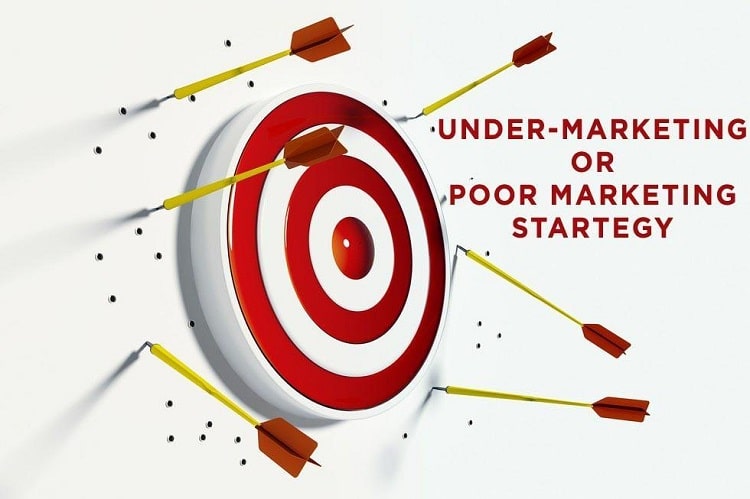
Under-Marketing or Poor Marketing Strategy
The first is self-explanatory: not using the various channels (particularly social media) at your disposal for spreading your work.
We have become inundated by the virtually endless variety of marketing choices on offer. Each is unique in its own right but here is considerable overlap among many of them in terms of reach, methodology and niche.
Most designers are terrible marketers because this vast web of choices either scares or completely confuses them.
They stay away. Bad idea.
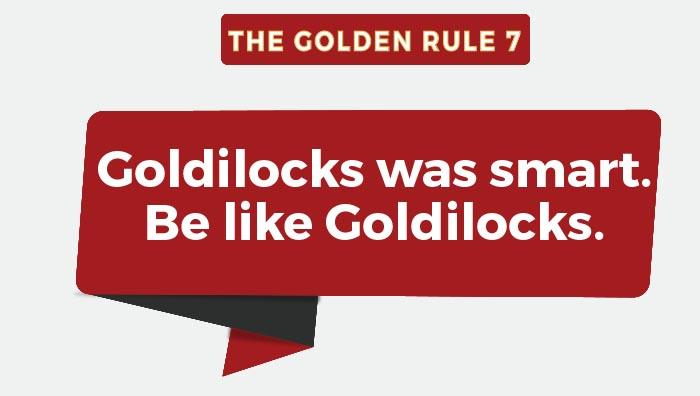
The Goldilocks Zone of Marketing
The second mistake of improper marketing is rather less easy to recognize but its effects can be equally, if not more, severe.
The Affordable Options
Wherever there are large amounts of money in play, many people will try their hand with dreams of striking it rich. The realm of online advertising is no different.
Infographic companies tend to hire affordable (sometimes ‘unbelievably’ cheap) marketers to reduce costs. The problem is that too many of the employed strategies do more harm than good.
Among the things they promise are:
The promise of hundreds or even thousands of backlinks may sound appealing… until you delve deeper into the sort of sites being linked to. Article directories which function more like dumping grounds for amateur writers create few opportunities and do not feature positively in Google ranking. Neither do an increasing number of blog networks.
Google constantly updates its evaluation algorithms and penalizes low-quality backlinks, the very type that the ‘affordable marketers’ specialize in. By using them, you could be penalized without even knowing it.
Cheap marketing isn’t quite so cheap if it is detrimental to your cause.
Premium Marketing
Improper utilization of web marketing for infographics is not limited to using cheaper marketing methods; every day, businesses and individuals are spending vast amounts of money on marketing campaigns in the hope of creating a viral infographic.
If this does not happen (the internet is fickle like that), the high cost of investment and modest returns can be disheartening. The low Return on Investment (ROI) is a major reason that many designers tend to stay away from marketing their infographics.
The Solution
The online marketing of infographics, or anything else for that matter, is a matter of balance. Neither too little nor too much so you achieve the reach you need for maximum exposure while keep costs in check.
The Way Forward
Infographics are the present and they are the future.
If you have the ability to create them, you hold the keys to incredible success… if they are created and disseminated properly. If you have a fantastic idea for one but do not have the technical know-how to create it, contact a professional infographic agency to bring it to life.


![The Power of Branding [Infographic]](https://blogger.googleusercontent.com/img/b/R29vZ2xl/AVvXsEgOfXbl_oVXfKipWHfolQ14eyCFCvT1VxyEn-h7ACTgZTZiFhoRAKARgHZvQruEksGIs6dAFtD68dQRw_E75CyK8j3xXKo21dhnnNrOAL_DOej6GUJSwFE_3LoZMtLry-oN2LVg-p9G3CT8/s0/Infographic-The-Power-of-Branding.png)