Showing posts with label online branding. Show all posts

Sunday, 20 November 2016

The Ultimate Guide to Online Branding and Building Authority Part II – Social Media


In the first part of the Ultimate Guide to Online Branding, we focused on using blogging to build your online presence. Now, we will focus on the best avenues and tips for online branding and authority building with social media. When it comes to social media, you cannot just create profiles and be done with it. You have to streamline your profiles to match your website to promote brand synergy, and you have to interact with your audience to build industry authority. The following guide will help you to do both!

Create a Consistent Brand Image for Each Profile

Have you ever visited a company’s social profile, and you were not sure that it belonged to the company? One of the most important parts of branding is keeping a consistent image across all of your online properties so that no matter what path a person takes from one property to the next, they will always know it is your brand. For example, someone might:
  • Find your fan page through a friend’s activity stream and then follow it to your blog, then website
  • See a tweet from someone they are following, visit your Twitter profile, and then continue onto your website.
  • Start at your website, then go to check out your social profiles to see if your company is engaging with fans (more on that later).
Just like you wouldn’t want pages on your website to be different themes, you will want your social profiles to do the same. Some great examples include:

Toyota

toyota website
Toyota probably does the best with branding between their website, Facebook, and YouTube accounts as shown above. All three are branded with the moving forward logo, and whenever they are running a promotion, such as the current one on the Camry, you will notice that their social accounts also highlight the same promotion so you can feel the consistency moving from one property to the next.

Southwest Airlines

southwest airlines website
The above shows Southwest’s branding between their website, Twitter, and YouTube profiles. Each online property uses the same color scheme and is currently focused on holiday travel deals. Although the logos are a bit different, the patterns on each coordinate and still bring the brand together.

Redbull

redbull website
Redbull’s branding between their website, Facebook, and Twitter profiles as shown above uses the same color scheme, logo, and focus on extreme sports.

Help People Find Your Profiles

I do a lot of competitive analysis in my line of work, and one of the most frustrating things I have to do is search for a brand’s social profiles. Don’t hide your social media presence – flaunt them! Be sure to:
  • Put Social Icons on Your Website – Let visitors to your website know that you are engaging with your audience on social media as well by adding social icons to your website design. The most common places to place them include the header / menu bar, sidebar, and footer. They don’t have to be large and in charge – Toyota’s icons are only 17×17 pixels, and they get the job done!
  • Put Social Links in Your Communications – Do you send emails regularly? Add social links to your email signature. Do you send newsletters? Add social icons to them.
  • Make Your Profiles Search Friendly – If I Google your brand name + Twitter, I should get your Twitter handle in the search results. To make this happen, be sure that the name of your social profile (and the username if possible) matches your brand name. You might be tempted to keyword optimize your profiles instead of optimizing them for your brand name – this is something you need to resist. You can learn more about social media SEO on how to optimize for both effectively for search engines.

Get Engaged with Your Followers, Fans, and Subscribers

You probably know that it is important to maintain an active account by posting lots of updates, and that it is best to do something other than blasting advertisements non-stop about your brand. So the question is, what should you be doing to stay active in your social networks? Get engaged with your audience, of course. Here are the top networks to get socially engaged in for your brand.

Twitter Engagement

In the Twitter Marketing Guide, we covered everything from competitor research to Twitter chats. So there’s no need to rehash those topics. If you’re goal is to build a strong presence on Twitter and demonstrate your brand’s authority in your industry, you need get involved with your following. Some ways to do so include:
  • Monitoring Brand Mentions – If you use Twitter itself, just do a search for your brand and save the search for future reference. If you use a Twitter management tool like HootSuite, create a keyword search column that will constantly update you with brand mentions. Anytime someone says something about your brand, whether it is good or bad, you should be responding to it if at all possible. This may mean adding some extra team members to your social media response staff. But over time, if people see that you are always on top of any discussion of your brand, you will gain trust and receive lots of great word of mouth marketing. People will tell their followers what a great response they’ve received from you and likely recommend you based on their satisfaction level.
  • Monitoring Industry Conversation – One of the best parts of Twitter is that you can jump into any conversation, anytime. So if you are a company providing web analytics software such as KISSmetrics, you can monitor anyone who talks about analytics, A/B testing, and other related topics and just answer simple questions that anyone asks about those topics demonstrating your expertise.
  • Curate the Best Content – Even if you are the best content creator in your industry, people often like to see a second opinion. Find out who other authorities are in your industry and share their opinion on industry topics with your following. You will gain more relevant followers simply for sharing the best news.

Facebook Fan Page Engagement

There are several different ways you can engage with your fans using your fan page that will keep your current fans active and bring new fans to your brand. These include:
  • Updating Your Fan Page on Facebook – It’s tempting to use HootSuite and other automated programs to update your fan page. But it’s becoming more and more obvious that if you want your updates to show up in fan’s news feeds that the updates must be organic, or originating from your fan page itself. So take the extra time to disable all of your autofeeds and start updating your fan page manually on Facebook. And when people start engaging with your posts or posting directly on your wall, be sure to respond to them. If they know they’re getting response, they’re more likely to return. No one likes a one-way broadcast.
  • Try Out Different Types of Updates – Don’t just post links or ask questions. Spice it up – add some video updates and photos. Different types of people like different types of content – be sure to try to cater to everyone by mixing your content up!
  • Thanks to the last major update to Facebook fan pages, you are able to use Facebook as your fan page. This means you can like pages as your fan page instead of your personal profile and then comment on them as your fan page. If you can find pages that are not direct competitors but whose audience will be interested in your brand, you will want to get active on them. For example, social media consultants should be living on Social Media Examiner’s fan page to connect with other individuals and businesses looking for social media help.

LinkedIn Engagement

If your brand isn’t on LinkedIn, you are missing out. LinkedIn allows you to add a company page where you can post your products, services, job openings, and even send status updates to your company followers including your latest blog posts. But some of the best branding and authority building activities for this network lie in the activity of the professional profiles including:
  • Participating in Groups – There are lots of great, active groups on LinkedIn in a wide variety of industries. Find the groups that have your potential client base within them and start getting active in discussions and posting useful content. Just be sure not to do anything that the group moderator would consider as spamming!
  • Answering Questions – The next best area to build a great professional reputation and strong authority in your industry is in LinkedIn Answers. There are questions asked every day in topics ranging from administration to technology. The people who answer the most questions are also featured on the answers’ home page as the week’s top experts!
  • Gaining Recommendations – Last, but not least, is recommendations. You can get recommendations on both the company pages and the professional profiles of your employees. Imagine if someone is browsing your company’s page and sees that the top employees have a ton of recommendations. It will show that you have a lot of experts in the industry which will make potential clients even more confident in your brand!

Your Online Branding & Authority Building Strategy Using Social Media

What is your brand’s strategy when it comes to building your online presence and authority using social media? Be sure to share the networks and strategies that have brought the best results.

The Ultimate Guide to Online Branding and Building Authority Part 1 – Blogging


What is the difference between online branding and building authority? Some would consider it the same thing, but in reality it can be two completely different processes. Online branding is a way to get more exposure for your brand on all levels of online marketing, especially search and social.
Building authority takes online branding to the next level by making each online presence for a brand authoritative. It goes beyond just about creating a blog or social media account. The following are ways you can build your online brand as well as your authority.

Start a Blog with Awesome Content

Blogs are beneficial for brands for three reasons. First of all, blogs help you rank well in search engines – Google loves fresh, unique content on websites that are constantly updated. If you’re looking to meet this goal, be sure to use WordPress – Matt Cutts, the public face of Google, says that “WordPress takes care of 80-90% of SEO” in his SEO for bloggers presentation (see slide #12).
Next, blogs provide for great content to share on social media networks. It’s hard to get traction if your just sharing product and sales pages. But if you’re sharing informative blog posts about your industry, you’re likely to get a lot of traffic and social shares.
Finally, great blogs can help your brand build authority in your niche. This is where you go above and beyond cookie cutter posts that talk about your product to creating awesome content in the form of:
  • Tutorials
  • Infographics
  • Videos
  • Industry Interviews
Awesome content will show fans of your industry that you know your stuff and therefore are the brand to go with for their business needs. A great example of this is the blog you are reading right now – KISSmetrics has infographics that have been tweeted and liked over 3,500 times (see The Science of Social Timing) and posts that have been viewed on StumbleUpon over 7,000 times (seeIncreasing Traffic with StumbleUpon).
There are two great fears that brands have when it comes to blogging. One is that they won’t have anything to blog about, and this is a complete myth. Everyone can find something to blog about. You just have to expand your definition of the target audience. Imagine you had a bait shop. You probably won’t get a lot of attention if you’re writing about worms and crickets all the time, but you will if you think about broader topics that would interest the people likely to shop at a bait shop. You can blog about the Deadliest Catch or River Monsters to grab fans of those programs. Or you can blog about environmental issues to grab environmentalists. Just think bigger!
The other fear is that they will be giving away “trade secrets” and lose their business. This one is especially common within industries like SEO, where a brand might feel like giving out ten steps to link building will give their customers the info they need to just do it themselves. But this just isn’t true. I have found that most of the time, if you give a complex, in-depth tutorial, a potential customer will see that your brand has the knowledge to do the service, but they won’t have the time or resources to do it for themselves. Hence, they’ll go with you because they feel confident that your brand has the expertise demonstrated in the content provided on the blog.
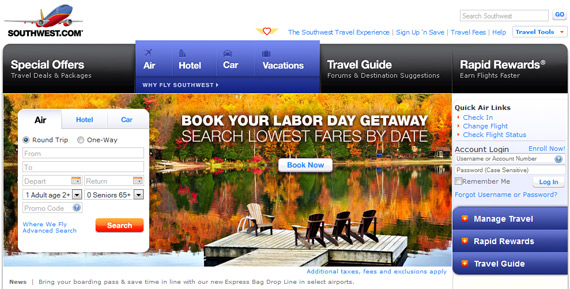
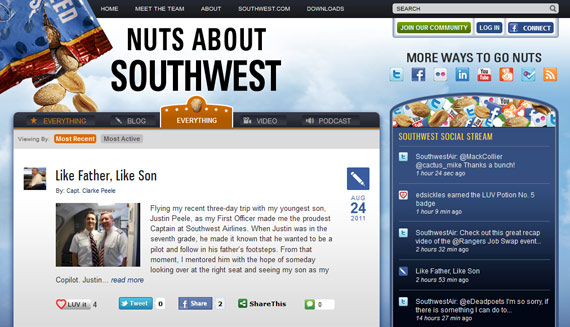
The key with your brand’s blog is to make sure that it is apparent who is behind the content. Whether you have your blog on your domain (yourbrand.com/blog), as a subdomain (blog.yourbrand.com), or as a separate site (yourbrandblog.com), be sure that it is matched to your brand. Check out Southwest’s site and blog (on separate domains) as an example of great branding.
excellent example of a well branded website
great example of a well branded blog

Guest Blog for Others

When it comes to blogging, you don’t want to keep the good stuff all to yourself. Guest blogging is a great way to build your online brand presence and authority. The basic goal is to find a blog whose audience will be interested in your brand, and create a great piece of content for that blog.
Notice I said great piece of content. I would go so far as to say that the content you create for another site’s blog should be even better than the content you create for your own site. You want the content you create for another blog to rock. You want that content to generate additional social shares, comments, and traffic for the blog owner.
As you create guest posts for others, be sure to save the links to those guest posts for future reference. As you approach new blogs that you would like to guest post upon, you will want to include those links as examples of your successful guest posts elsewhere. If you can convince the blog owner that your post will be a perfect fit for their audience and will drive significant traffic and response, the blog owner will have a hard time resisting.
My main tips for guest blogging for your brand include:

1. Find the best blogs to guest post on.

When it comes to blogs you want to get a guest post on, your goal is to find those whose audience would be interested in your brand. The blog should get a significant amount of traffic and social shares as well – there’s no reason to post on a blog that has no visitors just because it has high PageRank or any other criteria – you want to get some brand exposure out of this! Use directories like Technorati, PostRank, and Alltop to start your search for blogs in your niche or industry.

2. Find the blog’s guest blogging policy.

If you see that a blog allows guest bloggers or outside contributors, the blog should have some page or post on their site that describes their guest post policy. If you can’t find it easily on their navigation or using their search box, you can always try Googling site:blogurl.com guest post which should yield the site’s guest post page or at least the fact that they accept guest posts from others. If they do have a policy page or post (like KISSmetrics recently published), then be sure to note any and all criteria.

3. Start building a relationship with the blog owner first.

Now that you’ve found the blog you want to pitch an idea to, don’t just jump in and pitch them yet. Start by getting to know the blog owner first by following them on Twitter and their Facebook fan page. Comment on some of their latest posts – make those comments valuable to enhance discussion and demonstrate your writing skills and expertise in the industry. Tweet their posts using their Twitter handle and like / comment on the post on the Facebook fan page. Do this for at least a week or two before pitching content to them.

4. Research and pitch great topic ideas.

Don’t create the content first and then try to find it a home. Once you’ve found the right blogs and started engaging with the blogs themselves, you’ll get a feel for the type of content they publish.
To get an even better idea of what content is successful for each blog, subscribe to them in your Google Reader and (using Google Chrome) add the PostRank Extension. Then you will be able to see the site’s latest posts and their social engagement scores. The higher score, the more comments, tweets, Facebook likes, and other social shares the post received. Use these high-scoring posts as an indicator as to what content does well on each blog.
Now you can craft a personalized (ie. get the name of the blog owner – do not address them as webmaster, blogger, or some other generic tag) email saying that you have recently enjoyed reading their blog (as evidenced by your commenting & social sharing) and would like to contribute to their site as a guest blogger. After reading their guest post guidelines, you would like to see if they would be interested in the following topics. Then add three to four great post ideas that you believe will fit their audience to choose from. And of course, if you’ve done guest posts elsewhere, include some of your best links. If not, just include some great links from your own brand’s blog.

5. Create Awesome Content.

Once you get approval from the blogger, your next job is to create an awesome piece of content. Make sure it fits the guest posting guidelines you found earlier and that it has the overall feel / tone of the blog you are submitting to. Also be sure to add in relevant links throughout your blog post – not to your own properties, but internal links to the blog itself. This shows the blog owner you’re really giving it 100% for them and their audience and not just trying to promote yourself.
The self-promotion piece should come at the end with your guest bio. Check out other author bios on the blog and create yours to match. This is where you can say you are John Smith, an industry enthusiast from ABC Company. A great example is Leo Widrich’s bio from a guest post he submitted earlier this month:
About the Author: Leo Widrich is the Co-Founder of a Twitter App called Buffer. Every week he tweets more Twitter Tips on the Buffer blog.
Again, be sure to consider the blog’s guidelines and previous guest author bios when deciding to add one or more links back to your brand. The blog owner ultimately reserves the right to edit it as they feel is necessary.
6. Support your guest post once it goes live. It’s not over yet. After that guest post goes live, you should give it your unconditional love in the form of social sharing with your brand’s audience on Twitter, Facebook, etc. as well as coming by to respond to comments. That kind of response on your guest post will further boost your brand’s reputation as a great guest blogger as well as a confident authority in your niche.

Don’t Forget Blog Commenting

Blog commenting is a great branding and authority building exercise you can do on any blog in your niche. I would suggest subscribing to the top blogs in your industry in Google Reader, and each time there is a new post, be sure to read it thoroughly and add a valuable comment. Remember this isn’t about link building – this is about building your brand’s presence online as an authority in your industry.
You can use the blog’s previous comments as a guide as to how you should format yours. Some blogs require you to only use your real name, while others are a little more lenient in using your name – your company. I would suggest linking your comments to your blog as people are more willing to click through to a brand’s blog than their main website.

Your Online Branding & Authority Building Strategy Using Blogs

What is your brand’s strategy when it comes to building your brand’s authority using blogs? Be sure to share what you find brings your brand the best results in the comments!