Showing posts with label how to start a blog. Show all posts

Sunday, 20 November 2016

How To Start a Blog – Beginner’s Guide for 2016


So, you want to start a blog huh? Great idea!
But…how the heck do you get started? There’s so much info out there on the web, and everyone’s telling you to do different things. Who do you listen to? Where’s the starting point?
Damnit, maybe you should just forget it – it’s too confusing!
Well, hold up. I used to be a blogging newbie too. I had the same problems. I started my blog (BloggingBasics101.com) back in 2006, and I knew less than nothing about blogging. In fact it was only the week before I’d learnt what a blog was.
Now I know a ton about them, and my blog’s doing pretty well – I receive more than 300,000unique visitors per month which makes me consider myself someone you could listen to and learn from when it comes to building your own blog. I’m not some sort of Guru, but I certainly do know the basics.
I promise it’ll be simple, relatively easy, and definitely easy to understand (no stupid jargon). Sound good?
Awesome, let’s move on.

Why you should create a blog and join the blogging community

So below, I’m going to outline exactly what you need to do to get started and set up your own personal blog. Before we dive in though, I really want to talk about WHY you should build a blog.
Note: If you already have a solid idea of the whys, then skip this and go right ahead with the guide.
  1. Blogging has quickly become one of the most popular ways of communicating and spreading information and news. There are literally millions of blogs online (don’t worry, you can make yours stand out and get noticed!).
  2. It’s a great way to express yourself and also a fantastic way to share information with others.
  3. You become a better person and a better writer.
  4. The best reason? You can make money doing it!
I bet you already knew all of that, but it’s nice to be reminded.
One very last thing before we get started:
Creating your own blog can take a little while, probably up to 30 minutes. So grab yourself a coffee or juice (whatever you fancy) and let’s get stuck in. If you need any help during the set-up process, get in touch with me here and I’ll help as best I can and answer any questions you might have).

Disclosure: This guide to starting your own blog contains some affiliate links. If you purchase a service through one of these links I may earn a small commission, this is at no extra cost to you.

The Steps Covered In This Blogging Guide

There’s five main steps you need to go through in order to set up a blog. If you follow this guide and the five steps, you’ll have your own blog set up in 30 minutes or less. It’s nowhere near as difficult as setting up a website from scratch (there’s very little technical ability needed here). In fact, there’s no coding required by you. Good news, huh?

5 Steps on How to Start a Blog

  1. Choose your preferred blog platform
  2. Choose web hosting for your blog
  3. Setting up a blog on your own domain
  4. Design your blog
  5. Useful resources for blogging
So, we made it. Phew. Better late than never! So, without further ado, let’s jump into step 1.

Step 1 – Choose your preferred blogging platform

Choosing where you want to build blog is pretty much the first thing you have to do. I’m going to take a leap and assume you’ve heard of WordPress, and this is the platform I advocate. It’s massive.
It’s by far one of the biggest blogging platforms in the world, with countless plugins and add-ons and almost infinite ways to design and layout your blog.
There are more than 82 million active users of WordPress = a lot, basically.
wordpress
There are other alternatives however, and they are listed below:
  • Blogger – Definitely the next best thing to WordPress.
  • Tumblr – Half social network, half blog. Interesting, and very simple to use.
Even though WordPress is bigger (and probably better) than those two, here are my reasons why you should still go with WordPress:
  1. Super easy set-up and is free to use
  2. Tons of free themes and layouts (I’m not kidding, there’s gazillions).
  3. There’s a massive support forum in case you get stuck (you won’t, but it’s nice to have it there if you need it).
  4. Your blog will be insanely fast and it’ll also look Functionality and form – perfect!
  5. People can interact with you easily. Your content can be shared, commented on, and so on.

Now, Step 2 (see, we’re moving fast now!)

Step 2 – Self-hosting or a free alternative?

Whoa, slow down there! This is the biggest decision you’ll have to make before we go any further. You need to decide whether to pay for your blog or grab a free one.
WordPress, Tumblr and Blogger all offer free blogs for anyone. Awesome, right? It’s perfect for those of us who aren’t super serious about blogging. But it does have downsides:
1) You won’t be able to get your OWN domain name
On a free blog, your blog’s web address (your URL) will be butt-ugly. Like, really ugly. In short, create a free blog with any other the above free blog services and it’ll look like this:
  • yourblog.wordpress.com
  • yourblog.blogspot.com
  • yourblog.tumblr.com
I know, ugly right?
2) Limits and more limits
There are some limits to free blogs. You can’t fully monetize it, and you don’t have the possibility to upload all those videos and images you want to show everyone – it’s all limited. Worse still, you won’t even have access to the free themes offered by WordPress.
3) You DON’T OWN your blog
It might sound silly at first, but you don’t actually own your blog. It’s hosted on someone else’s web property and they can delete it if they want so. They have done so in the past, and keep doing it in the future. Which means all your hard work on your blog, all those countless hours of writing blog posts might be vanished within seconds. Sad…
On the other hand, with a self-hosted blog on your own domain name – you are the REAL owner of your blog. You’ll be able to name your blog whatever you want, for example “YourName.com” or “YourAwesomeBlog.com. You can end it with .com, .co.uk, .net, .org, or virtually any other web suffix. Add to that unlimited bandwidth for videos, images and content plus the free themes and you have a winning combo.
So how much is hosting and a domain name? Not as much as you’re thinking, fortunately. It usually works out to about $5 to $10 per month, depending on your hosting provider which is less than a couple of coffees.

Step 3 – Start a blog on your own domain (if you chose self-hosting and a custom domain)

wordpress blogging platform
I’m going to push ahead based on the premise you’ve chosen WordPress, and if you haven’t, you should. Seriously, it’s the best.
If you’re still a little confused by what a self-hosted blog is, allow me to explain and how you can go about setting one up for yourself.
You’ll need to come up with a domain name you like and also choose a hosting company that can host your blog.
  • Domain: The domain is basically the URL of your website. Examples: google.com (Google.com is the domain), Facebook.com (Facebook.com is the domain). See? Simple!
  • Hosting: Hosting is basically the company that puts your website up on the internet so everyone else can see it. Everything will be saved on there. Think of it as a computer hard-drive on the internet where your blog will be saved.
Personally, I use iPage (for my blog domain and hosting), and I’ve got nothing but good things to say about it. It’s probably one of the cheapest (less than $2.50 per month) hosting providers out there. A domain name will cost around $10-15 a year, but with iPage they throw that in for free :). Big smiles for that! They’re the providers I use for all of my blogs, including the one you’re reading right now.
If for any reason you don’t want to go with iPage, feel free to choose your own hosting company. Most, if not all of them, should have a “one-click” WordPress install solution on their admin panel.
That button will automatically install WordPress on your blog. Did I say it was simple or what?
All you need to do is sign up with iPage (or your chosen provider), choose your hosting plan and a domain name and look for the one-click WordPress install button on the admin panel.
WordPress essentials aren’t often needed, but I’d recommend whois privacy (that will keep all your personal details private) and definitely automated backups (this’ll save your website just in case anything fails or disappears, so you won’t lose any or very little of your blog).

Once WordPress is installed on your website, all you have to do to start blogging is go to your WP-Admin page usually www.yourblognamehere.com/wp-admin and start writing by adding a new post.
At the start, the layout looks confusing, but it gets very understandable quickly. Don’t worry!

Step 4 – Designing your WordPress blog

Now, the fun bit.
Let’s make your blog look exactly how you want it to. To choose a new theme, you can either head to Appearance > Themes and install a free WordPress theme or you can head to a premium theme website like ThemeForest.net and buy a theme for around $40.
I usually choose something that looks professional and pretty easy to customise. WordPress also has this awesome feature that allows you to change themes with just a few clicks. So if you start getting tired of your current blog template, you can just switch to another one without losing any precious content or images.
choose-blog-theme
Remember, your blog’s design should reflect both you and your personality, but also what the blog is about. There’s no point having a football-orientated theme if your blog is about tennis, understand?
On top of that, it should be easy to navigate if you want people to stick around. If it’s tricky and difficult to move around it, people won’t stay. Design is a subjective art; meaning everyone likes different things.
But no one likes ugly websites, and they especially hate websites that need a university degree to navigate. Make it easy for them.
Last step! Woo!

Step 5 – Useful Resources For Beginner Bloggers

Bloggers come to blogging arena with varying degrees of online and social media experience, but we’ve all made more than a few newbie mistakes – there’s always room for more learning and improvement, whether you’re a beginner or you’ve been blogging for years.
And that’s it! I’m more than confident that your initial blog set up should now be finished and ready to go, and all that should have been really damn easy (unlike my first time, lucky you!). If you are having any problems installing WordPress on iPage then this guide may help.
If by some unfortunate circumstance you get stuck or have any questions for me about how to create a blog, just get in touch with me or leave a comment below. I’ll help you out with any problems.
Enjoy your new blog!

The Ultimate Guide to Online Branding and Building Authority Part 1 – Blogging


What is the difference between online branding and building authority? Some would consider it the same thing, but in reality it can be two completely different processes. Online branding is a way to get more exposure for your brand on all levels of online marketing, especially search and social.
Building authority takes online branding to the next level by making each online presence for a brand authoritative. It goes beyond just about creating a blog or social media account. The following are ways you can build your online brand as well as your authority.

Start a Blog with Awesome Content

Blogs are beneficial for brands for three reasons. First of all, blogs help you rank well in search engines – Google loves fresh, unique content on websites that are constantly updated. If you’re looking to meet this goal, be sure to use WordPress – Matt Cutts, the public face of Google, says that “WordPress takes care of 80-90% of SEO” in his SEO for bloggers presentation (see slide #12).
Next, blogs provide for great content to share on social media networks. It’s hard to get traction if your just sharing product and sales pages. But if you’re sharing informative blog posts about your industry, you’re likely to get a lot of traffic and social shares.
Finally, great blogs can help your brand build authority in your niche. This is where you go above and beyond cookie cutter posts that talk about your product to creating awesome content in the form of:
  • Tutorials
  • Infographics
  • Videos
  • Industry Interviews
Awesome content will show fans of your industry that you know your stuff and therefore are the brand to go with for their business needs. A great example of this is the blog you are reading right now – KISSmetrics has infographics that have been tweeted and liked over 3,500 times (see The Science of Social Timing) and posts that have been viewed on StumbleUpon over 7,000 times (seeIncreasing Traffic with StumbleUpon).
There are two great fears that brands have when it comes to blogging. One is that they won’t have anything to blog about, and this is a complete myth. Everyone can find something to blog about. You just have to expand your definition of the target audience. Imagine you had a bait shop. You probably won’t get a lot of attention if you’re writing about worms and crickets all the time, but you will if you think about broader topics that would interest the people likely to shop at a bait shop. You can blog about the Deadliest Catch or River Monsters to grab fans of those programs. Or you can blog about environmental issues to grab environmentalists. Just think bigger!
The other fear is that they will be giving away “trade secrets” and lose their business. This one is especially common within industries like SEO, where a brand might feel like giving out ten steps to link building will give their customers the info they need to just do it themselves. But this just isn’t true. I have found that most of the time, if you give a complex, in-depth tutorial, a potential customer will see that your brand has the knowledge to do the service, but they won’t have the time or resources to do it for themselves. Hence, they’ll go with you because they feel confident that your brand has the expertise demonstrated in the content provided on the blog.
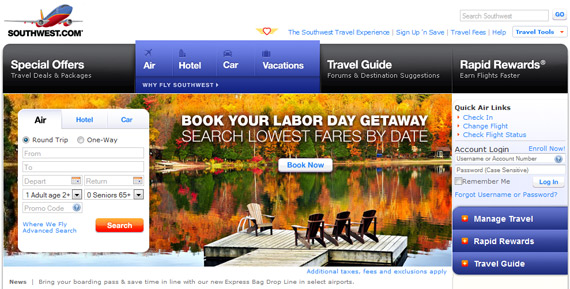
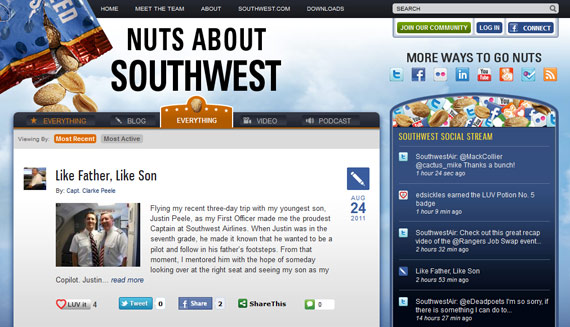
The key with your brand’s blog is to make sure that it is apparent who is behind the content. Whether you have your blog on your domain (yourbrand.com/blog), as a subdomain (blog.yourbrand.com), or as a separate site (yourbrandblog.com), be sure that it is matched to your brand. Check out Southwest’s site and blog (on separate domains) as an example of great branding.
excellent example of a well branded website
great example of a well branded blog

Guest Blog for Others

When it comes to blogging, you don’t want to keep the good stuff all to yourself. Guest blogging is a great way to build your online brand presence and authority. The basic goal is to find a blog whose audience will be interested in your brand, and create a great piece of content for that blog.
Notice I said great piece of content. I would go so far as to say that the content you create for another site’s blog should be even better than the content you create for your own site. You want the content you create for another blog to rock. You want that content to generate additional social shares, comments, and traffic for the blog owner.
As you create guest posts for others, be sure to save the links to those guest posts for future reference. As you approach new blogs that you would like to guest post upon, you will want to include those links as examples of your successful guest posts elsewhere. If you can convince the blog owner that your post will be a perfect fit for their audience and will drive significant traffic and response, the blog owner will have a hard time resisting.
My main tips for guest blogging for your brand include:

1. Find the best blogs to guest post on.

When it comes to blogs you want to get a guest post on, your goal is to find those whose audience would be interested in your brand. The blog should get a significant amount of traffic and social shares as well – there’s no reason to post on a blog that has no visitors just because it has high PageRank or any other criteria – you want to get some brand exposure out of this! Use directories like Technorati, PostRank, and Alltop to start your search for blogs in your niche or industry.

2. Find the blog’s guest blogging policy.

If you see that a blog allows guest bloggers or outside contributors, the blog should have some page or post on their site that describes their guest post policy. If you can’t find it easily on their navigation or using their search box, you can always try Googling site:blogurl.com guest post which should yield the site’s guest post page or at least the fact that they accept guest posts from others. If they do have a policy page or post (like KISSmetrics recently published), then be sure to note any and all criteria.

3. Start building a relationship with the blog owner first.

Now that you’ve found the blog you want to pitch an idea to, don’t just jump in and pitch them yet. Start by getting to know the blog owner first by following them on Twitter and their Facebook fan page. Comment on some of their latest posts – make those comments valuable to enhance discussion and demonstrate your writing skills and expertise in the industry. Tweet their posts using their Twitter handle and like / comment on the post on the Facebook fan page. Do this for at least a week or two before pitching content to them.

4. Research and pitch great topic ideas.

Don’t create the content first and then try to find it a home. Once you’ve found the right blogs and started engaging with the blogs themselves, you’ll get a feel for the type of content they publish.
To get an even better idea of what content is successful for each blog, subscribe to them in your Google Reader and (using Google Chrome) add the PostRank Extension. Then you will be able to see the site’s latest posts and their social engagement scores. The higher score, the more comments, tweets, Facebook likes, and other social shares the post received. Use these high-scoring posts as an indicator as to what content does well on each blog.
Now you can craft a personalized (ie. get the name of the blog owner – do not address them as webmaster, blogger, or some other generic tag) email saying that you have recently enjoyed reading their blog (as evidenced by your commenting & social sharing) and would like to contribute to their site as a guest blogger. After reading their guest post guidelines, you would like to see if they would be interested in the following topics. Then add three to four great post ideas that you believe will fit their audience to choose from. And of course, if you’ve done guest posts elsewhere, include some of your best links. If not, just include some great links from your own brand’s blog.

5. Create Awesome Content.

Once you get approval from the blogger, your next job is to create an awesome piece of content. Make sure it fits the guest posting guidelines you found earlier and that it has the overall feel / tone of the blog you are submitting to. Also be sure to add in relevant links throughout your blog post – not to your own properties, but internal links to the blog itself. This shows the blog owner you’re really giving it 100% for them and their audience and not just trying to promote yourself.
The self-promotion piece should come at the end with your guest bio. Check out other author bios on the blog and create yours to match. This is where you can say you are John Smith, an industry enthusiast from ABC Company. A great example is Leo Widrich’s bio from a guest post he submitted earlier this month:
About the Author: Leo Widrich is the Co-Founder of a Twitter App called Buffer. Every week he tweets more Twitter Tips on the Buffer blog.
Again, be sure to consider the blog’s guidelines and previous guest author bios when deciding to add one or more links back to your brand. The blog owner ultimately reserves the right to edit it as they feel is necessary.
6. Support your guest post once it goes live. It’s not over yet. After that guest post goes live, you should give it your unconditional love in the form of social sharing with your brand’s audience on Twitter, Facebook, etc. as well as coming by to respond to comments. That kind of response on your guest post will further boost your brand’s reputation as a great guest blogger as well as a confident authority in your niche.

Don’t Forget Blog Commenting

Blog commenting is a great branding and authority building exercise you can do on any blog in your niche. I would suggest subscribing to the top blogs in your industry in Google Reader, and each time there is a new post, be sure to read it thoroughly and add a valuable comment. Remember this isn’t about link building – this is about building your brand’s presence online as an authority in your industry.
You can use the blog’s previous comments as a guide as to how you should format yours. Some blogs require you to only use your real name, while others are a little more lenient in using your name – your company. I would suggest linking your comments to your blog as people are more willing to click through to a brand’s blog than their main website.

Your Online Branding & Authority Building Strategy Using Blogs

What is your brand’s strategy when it comes to building your brand’s authority using blogs? Be sure to share what you find brings your brand the best results in the comments!