

Are you ready to connect with a wider audience?
Want to know the best ways to leverage social media for your small business?
If you haven’t used social media to market your products and services, you’re going to love how easy it is to get started.
In this article, I’ll show you seven steps you can take to make social media marketing work for you.
Why Social Media for Small Businesses?
As a startup or small business owner, you know there’s a lot to accomplish with limited resources.
Traditional marketing can be a drain on your funds. Social media marketing, on the other hand, is pretty low-cost and gives you a direct line to current and prospective customers.

Social media offers small businesses a cost-effective way to reach their customers. Image source: iStockPhoto.com.
It’s a trade-off though. What you save in dollars you’ll invest in time. You have to be smart and efficient with the resources you have to achieve the results you need.
This guide is for startup and small business owners with limited resources, but who want to learn how to establish and build their brand using social media.
#1: Do Your Homework
Behind every exceptional social media campaign is a great strategy.
Social media is all about connecting with your audience on an authentic level. To do that, you have to intimately understand your current and potential customers.
Start by defining your audience. Distinguish individual character profiles by age, gender, interests, profession, etc. Don’t just say it out loud. Write down the details and find images that represent your target audience.
Next, crystallize your message. Based on your defined target audience, what are the key problems or concerns you can address or solve? Expand on and define those pain points for each character and write it under each profile.
Below that, write down three key marketing messages you want to communicate to that audience.
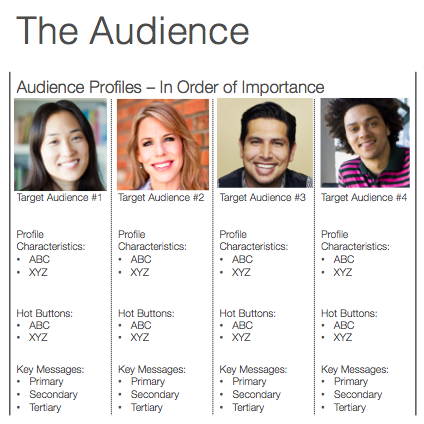
Create profiles for your audience—it’ll help you target your messages to them.
Now that you’ve defined your audience and message, take the time to find out which social networks they prefer.
All social media channels are not created equal. Each one has a different primary audience, cadence and focus. It’s important to understand the differences so you expend your efforts on the right channels.
#2: Coordinate Your Social Channels
If you treat each social media platform as a stand-alone effort, your success will be limited. Your networks should work together to help you achieve your goals.
Your website is your brand’s home base. Coordinate your social media efforts to push people to your website where they can buy your product or service.
Use your blog to establish your brand’s voice and share information. It’s also a valuable opportunity to engage with your site visitors and lead them through your sales funnel.
You can optimize your website and blog for social media by adding a few easy elements to your design.

Kim Garst makes sure her social icons are seen on her front page.
If you want visitors to follow your various social profiles, make sure you display social icons prominently in your header or sidebar, like these shown on Kim Garst‘s site. They should link directly to your profiles so your readers can follow you immediately.
Include a call to action (CTA) at the end of your blog posts asking readers to like you on Facebook or follow you on Twitter (or whichever platforms you’ve determined are best for your audience).
Integrate live social media feeds (e.g., Facebook and Twitter) so visitors can see your recent activity. When your audience can see what you’re sharing, they may be more likely to follow you.
Incorporate sharing buttons on your pages and posts to ensure that your content is share-friendly.
When people come across valuable content, they want to share it with their friends and followers. If you don’t have sharing buttons, your visitors will likely click away and you’ve lost that opportunity to reach a wider related audience.
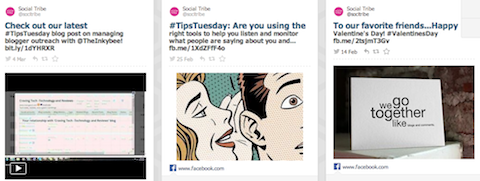
Here’s how Rebel Mouse’s content feed displays across multiple social media channels.
Tool Tip: Socialize your website with Rebel Mouse, an all-in-one, real-time publishing, advertising and analytics platform.
Rebel Mouse aggregates all of your social media content and hosts a real-time feed on your website.
If you haven’t started an email newsletter, I encourage you to start one now. They’re an important way to stay in front of current and prospective customers.
Your newsletter’s design should display social icons prominently and include a CTA inviting your audience to join your social media communities.
I suggest also featuring social media content that highlights community members or shares promotions or giveaways.
The Social Tribe eNewsletter displays all of its social media icons prominently.
Tool Tip: ClicktoTweet is an easy way to promote sound bites of your content, whether it’s through your website, blog or newsletter. It auto-populates a tweet with your message. Users just have to click on the link and hit send!
#3: Get Started, but Start Small
You’ve defined your target audience, you know where to reach them and you’ve optimized your other marketing touch points. It’s time to get social.
This is one of the most important pieces of advice to keep in mind, so listen up! Start small.
Social media takes time and energy, which are precious resources. Set yourself up for success by starting with a manageable load. I suggest you choose one or two platforms to start with.
The best way to guarantee consistency is to incorporate social media into your daily routine. Block out the time on your calendar, turn off all distractions and dedicate time to managing your social media accounts. Do this in one or two different time slots every day.
In your first month or two, expect to spend a minimum of 15-30 minutes a day on social activities. You can increase the time as you see fit.
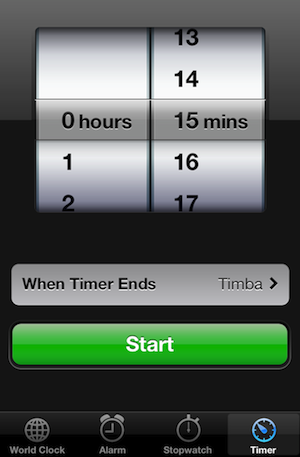
Use a timer to track your social activity time.
Remember those audience profiles and sample messages? Use them to determine what original and curated content you’ll share and create an editorial calendar to keep track of that content.
Your aim is to help your readers, so give them a tip they can use or share information that helps them solve a problem. When you give out relevant information, people come to view you as an expert.
Tool Tip: You’ll need a social media management tool to organize and manage your daily social media activities. HootSuite is a social media dashboard that offers monitoring, scheduling and analytic services. Sprout Social is another cost-effective tool that helps you find and schedule content and track social media performance.
#4: Listen and Share
Social media conversations are happening all around in real time.
Social listening is an excellent tactic to monitor what people are saying about your brand. Respond to comments, mentions and feedback even if they’re negative. You want to turn that negative into a positive!
Tool Tip: Mention app monitors the web, including the major social media channels, and tells you every time somebody mentions your name, brand or target keywords.
Mention app is one of many tools you can use to listen for mentions of your brand on the web.
Content is the crux of social marketing. Unfortunately, combing through the Internet for good content to share can be slow and time-consuming.
To avoid getting bogged down, set up a process for organizing and aggregating quality content that provides value to your audience. Add the content to your editorial calendar and you can share it when you’re ready.
Tool Tip: Feedly is a magazine-style newsreader that aggregates content from different sources and organizes it for you. It’s a big time-saver when you’re looking for timely, relevant content to share!

Feedly is one way to aggregate content from around the web that’s related to your brand.
#5: Create Your Daily Plan
With a steady stream of content in the pipeline, you’re primed to post and engage on social media.
Make a list of the activities you plan to do every day. For example, comment on and/or link content on three different Facebook pages. On Twitter, tweet and retweet 3-5 times per day (you can schedule these).
If you’re using Pinterest, pin and repin 3-5 images per day. If LinkedIn is the best platform for your audience, share a link and like other people’s links.
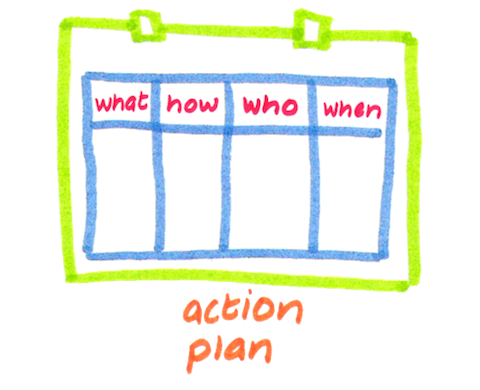
Make an action plan for your daily social media activities—and stick to it!
When you’re comfortable with those daily activities, join groups and communities to target specific demographics. Initiate and participate in more conversations by asking questions and posting comments to updates by others.
Continue to personalize your brand by welcoming new followers and thanking them for sharing your content or offering a compliment.
Above all, be intentional about your social activities. Success isn’t about chance, it’s about strategy and tactics.
#6: Boost Results With Social Advertising
If you want to accelerate your social media performance, it’s worth your time to explore paid advertising options.
Facebook offers a robust number of advertising solutions to help garner more sales, website traffic, brand exposure and audience engagement.
If Twitter is one of your main platforms, you have two advertising solutions: promoted content and promoted accounts. Promoted content helps you cut through the noise and serve your content to tailored audiences. Promoted accounts help increase the size of your Twitter following.
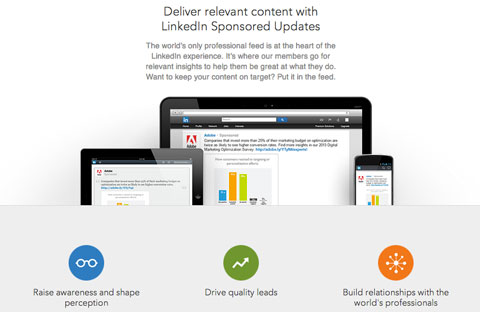
Explore paid options to boost your visibility and success on social media.
LinkedIn also offers opportunities to reach specific audiences. You can buy advertising or use the sponsored updates feature to increase your brand’s visibility.
Even if your budget is small, don’t dismiss social advertising. Used strategically it can produce great results.
#7: Lather, Rinse, Repeat
The last step is the most critical: Measure and analyze your results.
Tracking performance data is the best way to identify which tactics are working and which aren’t. A few things to watch are growth, engagement and sharing.
Most social media networks have tools you can use to track and measure your performance.
Google Analytics is a popular and easy-to-use option for monitoring traffic and interactions on your website or blog. Keep track of which social media channels are driving the most traffic to your site.
To stay on top of your social media plan, review your metric reports regularly (at least once a week). Every 2 or 3 months, step back and evaluate the big picture. Make adjustments for anything not working, and try to recreate the things that are.
Tool Tip: Sprout Social creates easy-to-understand social media reports that can help you evaluate your social media performance. You can even compare your success to your competitors’.
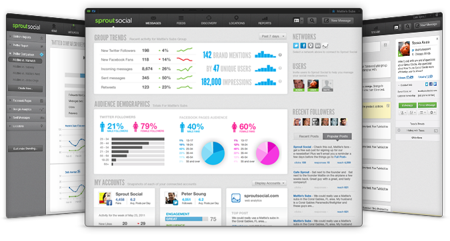
Sprout Social has excellent reports to help you track and manage your social media performance.
Some Final Thoughts
When using social media for your startup or small business, the most important thing to remember is that social media is a marathon, not a sprint.
Use this social media guide to start your social marketing efforts. Define your audience and choose the best platform to reach them. Do your research, integrate your social media icons and links, share your (and others’) content and keep track of how things are going. Follow those steps and you’ll be positioned for success!
What do you think? What tools do you use to reach your target audience? What challenges have you had to overcome? Do you have tips to share? Tell us your thoughts so we can learn together!


